 By Hamza@globalarena.org
The Fever vs Dream matchup has developed into one of the more interesting fixtures on the WNBA calendar. When the Indiana Fever and Atlanta Dream meet, fans get a contrast of playing styles, talented rosters, physical defense and plenty of individual battles across the floor.
Interest around Indiana Fever vs Atlanta Dream has also grown because these teams are no longer simply meeting during ordinary regular-season games. Their recent history includes meaningful Eastern Conference contests and a 2025 first-round playoff series, giving future meetings an added competitive edge. Atlanta’s official 2026 schedule specifically describes its June 20 game against Indiana as a rematch of that playoff series.
For basketball fans searching for Fever vs Dream, the matchup is worth following for much more than the final score. Pace, rebounding, perimeter shooting, turnovers, transition defense and late-game execution can all shape how these games unfold.
Fever vs Dream at a Glance
| Matchup Area | Indiana Fever | Atlanta Dream |
|---|---|---|
| Team | Indiana Fever | Atlanta Dream |
| League | WNBA | WNBA |
| Home Market | Indianapolis, Indiana | Atlanta, Georgia |
| Matchup Type | Regular season / possible postseason | Regular season / possible postseason |
| Key Battle | Offensive creation and spacing | Physical defense and scoring pressure |
| Important Factor | Limiting turnovers | Controlling Indiana’s offensive rhythm |
| 2026 Meetings | June 4, June 18, June 20, August 16 | June 4, June 18, June 20, August 16 |
| Fan Interest | Star talent and offensive play | Strong team competition and home atmosphere |
Indiana’s official 2026 schedule lists four meetings against Atlanta: June 4 and June 18 in Indianapolis, followed by June 20 and August 16 in Atlanta.
Why Fever vs Dream Gets Attention
A good WNBA matchup needs more than recognizable names. It needs contrasting strengths, competitive games and tactical questions that can change from one meeting to another.
That is part of what makes Fever vs Dream interesting.
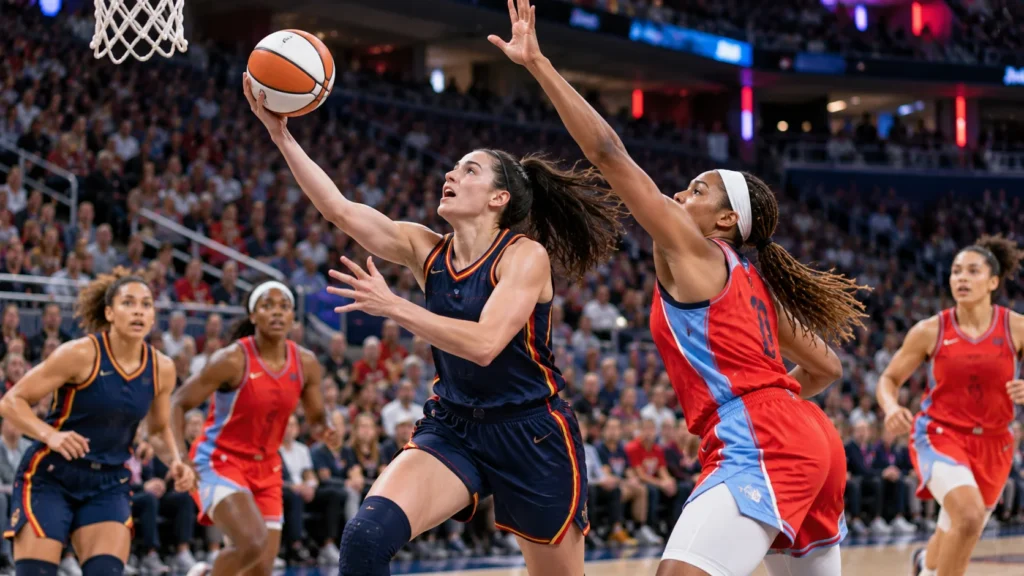
Indiana can create pressure when its offense moves quickly and gets multiple players involved. Fast ball movement can force defenses to make difficult decisions, especially when shooters are positioned around the perimeter.
Atlanta presents a different challenge. The Dream can make opponents work for comfortable possessions and punish mistakes at the other end.
That creates an important question every time the teams meet: which side can establish its preferred style first?
If Indiana finds offensive rhythm early, Atlanta may need to disrupt passing lanes and slow the game. If Atlanta controls the physical side of the contest, Indiana may have to be more patient in half-court possessions.
Indiana Fever’s Approach
The Fever have attracted major attention in recent seasons, and Caitlin Clark has naturally been central to that interest.
Clark’s shooting range and passing ability can change how opponents defend Indiana. Defenders cannot simply wait near the three-point line because deep shooting creates additional spacing. At the same time, aggressive pressure can open passing opportunities elsewhere.
But Fever vs Dream cannot be reduced to one player.
Indiana’s effectiveness depends on how well the entire offense functions. Screens need to create useful advantages. Off-ball players need to move at the right time. Frontcourt players have to provide rebounding and interior scoring.
When Indiana successfully connects those pieces, defending the Fever becomes much more complicated.
Atlanta Dream’s Challenge
Atlanta enters a Fever matchup knowing that allowing Indiana to settle comfortably into its offense can create problems.
The Dream therefore need disciplined defensive possessions.
That means communicating through screens, protecting the paint without leaving easy perimeter opportunities and getting back quickly after missed shots or turnovers.
Atlanta’s offense is equally important.
Trying to defeat Indiana solely by slowing the Fever is unlikely to be enough. The Dream also need productive possessions of their own, especially during stretches when Indiana puts together consecutive baskets.
The ability to answer scoring runs can be crucial in Dream vs Fever games.
Caitlin Clark’s Impact on Fever vs Dream
Caitlin Clark changes the geometry of a basketball court.
Her ability to shoot from well beyond the traditional three-point line means defenders may have to extend farther from the basket. Once that happens, additional space can become available for drives, cuts and screen actions.
Atlanta therefore faces several choices.
Should the Dream pressure Clark aggressively? Should they switch screens? Should they send extra defensive attention and force another Fever player to create the possession?
Each strategy carries risk.
Overcommitting can leave another player open. Giving Clark too much room can create a clean shot or passing lane.
That tactical problem is one reason Fever vs Atlanta Dream games can be so compelling.
The Rebounding Battle
Rebounding sometimes receives less attention than scoring, but it can decide close WNBA games.
An offensive rebound gives a team another possession. A defensive rebound ends the opponent’s opportunity and can start transition offense.
For the Fever, securing defensive rebounds is particularly valuable because it can create chances to attack before Atlanta’s defense is completely organized.
For Atlanta, offensive rebounding can disrupt Indiana’s rhythm. Even when the first shot misses, second-chance opportunities can keep pressure on the Fever defense.
Fans watching Indiana Fever vs Atlanta Dream should therefore pay attention to what happens immediately after shots go up.
Turnovers Could Decide the Game
Turnovers are especially dangerous against teams capable of converting mistakes into quick points.
A live-ball turnover near the perimeter can instantly become a transition opportunity. Instead of defending a structured half-court possession, players may suddenly be running toward their own basket.
Indiana needs clean decision-making when Atlanta applies pressure.
Atlanta faces the same challenge when Indiana becomes aggressive defensively.
Raw turnover totals only tell part of the story. The location and type of turnover matter too.
A dead-ball turnover gives the defense time to organize. A bad pass directly into an opponent’s hands can produce an immediate scoring chance.
Three-Point Shooting
Modern basketball places enormous value on three-point shooting, and Fever vs Dream is no exception.
A short stretch of successful perimeter shots can completely change a game.
Imagine a six-point Atlanta advantage disappearing after consecutive Indiana three-pointers. The scoreboard is suddenly level, the crowd changes and Atlanta may adjust its defensive coverage.
The same can happen in Atlanta’s favor.
That makes perimeter defense critical. Players need to contest shots without repeatedly allowing easy drives to the basket.
The team that finds the better balance can gain a major advantage.
Transition Basketball
Transition play is another area worth monitoring.
Indiana can be dangerous when it pushes the ball before the defense is set. Quick decisions can create open shots or favorable matchups before Atlanta establishes its preferred coverage.
The Dream’s first job after losing possession or missing a shot is therefore to recover.
Atlanta can also attack in transition.
Indiana must avoid sending too many players toward the offensive glass if doing so leaves the backcourt exposed.
These small tactical decisions happen throughout the game and may not always appear in highlight clips, but they can determine the final result.
Half-Court Execution
Fast basketball is entertaining, but important games often eventually become half-court contests.
Defenses adjust.
Transition opportunities decrease.
Possessions become longer.
That is when execution matters.
Indiana may use screens to create mismatches or free perimeter shooters. Atlanta may try to force the Fever toward less comfortable areas of the floor.
On the other side, the Dream need reliable ways to create quality shots when their first offensive action fails.
The final minutes make this particularly important. A team cannot always rely on transition points when every possession becomes valuable.
Fever vs Dream in the 2026 Season
The 2026 schedule gives fans several opportunities to see this matchup.
The Fever announced four games against Atlanta: June 4, June 18, June 20 and August 16. The first two are scheduled in Indianapolis, while the latter two are in Atlanta.
The June 4 meeting also formed part of Atlanta’s 2026 Commissioner’s Cup schedule.
Atlanta scheduled the June 20 and August 16 Fever games at State Farm Arena. The Dream announced that five of its 22 regular-season home games would be played there during 2026, with the two Indiana matchups among them.
That larger-arena scheduling illustrates the significant audience interest surrounding the matchup.
Home-Court Environment
Home court can influence the atmosphere of Fever vs Dream without guaranteeing the outcome.
In Indianapolis, Indiana gets the support of its home crowd and familiarity of playing on its regular floor.
Atlanta gets those benefits when the matchup shifts south.
Crowd energy becomes particularly noticeable during scoring runs. A three-pointer followed by a defensive stop can quickly raise the intensity inside an arena.
Experienced teams need to remain composed through those moments.
Coaching Adjustments Matter
One advantage of teams playing several times during a season is that coaches accumulate information from previous meetings.
Maybe one defensive coverage failed in the first matchup.
Perhaps a particular screen action repeatedly created open shots.
The next meeting gives the opposing staff an opportunity to respond.
That creates a basketball chess match across the season.
The June version of Fever vs Dream may therefore look different from an August meeting because each team has additional film and experience to study.
What Fans Should Watch
Instead of watching only the scoreboard, pay attention to the first few minutes of each quarter.
Which team is controlling the pace?
Watch how Atlanta defends Indiana’s primary ball handlers. Notice whether defenders go over or under screens and how much help arrives from the paint.
Then look at Indiana’s transition defense.
Also monitor offensive rebounds, free throws and turnovers. Close games are frequently determined by these less glamorous possessions rather than spectacular highlights.
Bench production can matter as well. Starters cannot play every minute, so a productive reserve group can protect a lead or keep the score close.
Why the Matchup Matters
Every regular-season game contributes to the standings, but repeated matchups can become especially meaningful when teams are competing for postseason positioning.
The 2026 WNBA playoff format sends the league’s top eight teams into the postseason regardless of conference, with teams seeded according to regular-season records.
That makes individual wins valuable.
The Fever and Dream also carry recent postseason history into their meetings. Atlanta’s official schedule notes that the teams met in the first round of the 2025 playoffs.
That recent history gives Fever vs Dream additional context whenever they share the court again.
Final Thoughts
Fever vs Dream offers a compelling mix of shooting, defensive pressure, transition basketball and tactical adjustments.
Indiana’s offensive creativity can force Atlanta to defend large areas of the court, while the Dream can challenge the Fever through physical defense, rebounding and disciplined team play. Neither side can rely entirely on one star or one strategy.

The most important factors are often simple: protect the basketball, rebound consistently, defend the perimeter, limit easy transition opportunities and execute when the game slows down.
With four regular-season meetings scheduled in 2026 and recent playoff history connecting the teams, Indiana Fever vs Atlanta Dream remains a matchup worth following throughout the WNBA season.
FAQs About Fever vs Dream
1. What is Fever vs Dream?
Fever vs Dream refers to a WNBA matchup between the Indiana Fever and Atlanta Dream.
Both teams compete several times during the regular season.
2. When is the next Fever vs Dream game?
The teams have multiple meetings scheduled during the 2026 WNBA season.
Game dates and times can be checked on the official WNBA schedule.
3. Where do Indiana Fever vs Atlanta Dream games take place?
Games are played in Indianapolis when the Fever are home and Atlanta when the Dream are home.
The venue depends on the specific game on the schedule.
4. Who are the key players to watch in Fever vs Dream?
Caitlin Clark is one of the major names associated with the Indiana Fever.
Atlanta also has talented scorers and defenders who can influence the matchup.
5. Why is Fever vs Dream a popular WNBA matchup?
The matchup combines talented players, competitive basketball and contrasting playing styles.
Recent postseason history has also added more interest to their meetings.
6. What can decide an Indiana Fever vs Atlanta Dream game?
Three-point shooting, turnovers, rebounding and transition defense can play major roles.
Late-game execution is especially important when the score stays close.
7. How can I watch Fever vs Dream?
Broadcast and streaming options can vary depending on the date and location.
Check the official WNBA schedule before the game for current viewing information.