 By Hamza@globalarena.org
Corn tortillas are a popular choice for tacos, enchiladas, quesadillas, and many other meals. If you are avoiding gluten, you may wonder whether they are a safe alternative to flour tortillas. The short answer is that corn tortillas can be gluten-free, but not every corn tortilla is guaranteed to be gluten-free.
Corn itself does not naturally contain gluten. However, some tortillas may include wheat ingredients, while others may come into contact with gluten during manufacturing or food preparation. This matters especially for people with celiac disease, who need to avoid even small amounts of gluten.
This guide explains what corn tortillas are made of, how to check labels, where cross-contact can happen, and how to choose a suitable option for your diet.
Are Corn Tortillas Gluten Free?
Traditional corn tortillas are made from corn masa, water, and sometimes salt. These ingredients are naturally gluten-free, so a tortilla made only from them can be a gluten-free food.
The important distinction is between corn as an ingredient and the finished tortilla. A product labeled “corn tortilla” may contain additional ingredients, and its manufacturing process may involve shared equipment. For that reason, the name alone does not confirm that it is suitable for someone who must strictly avoid gluten.
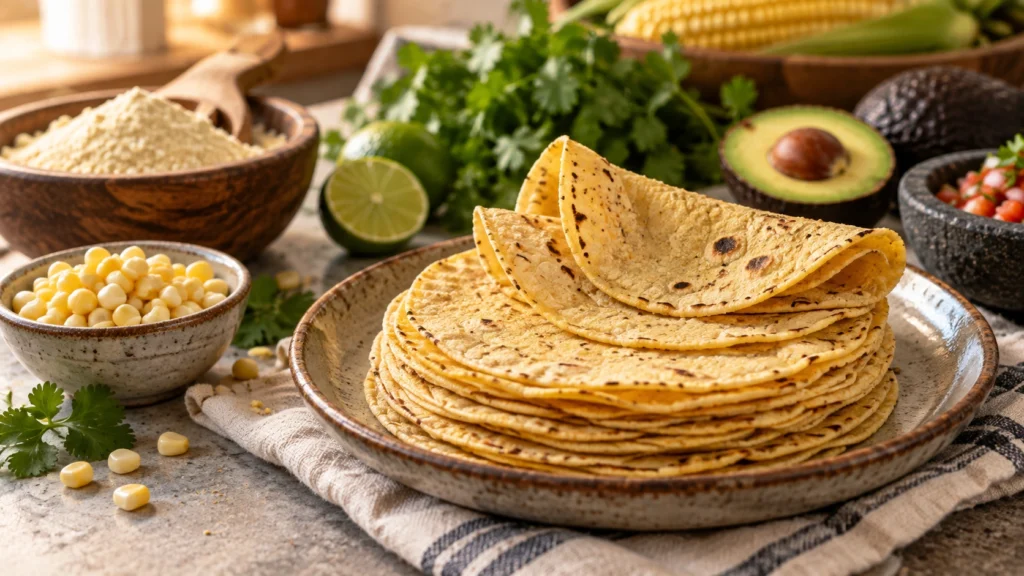
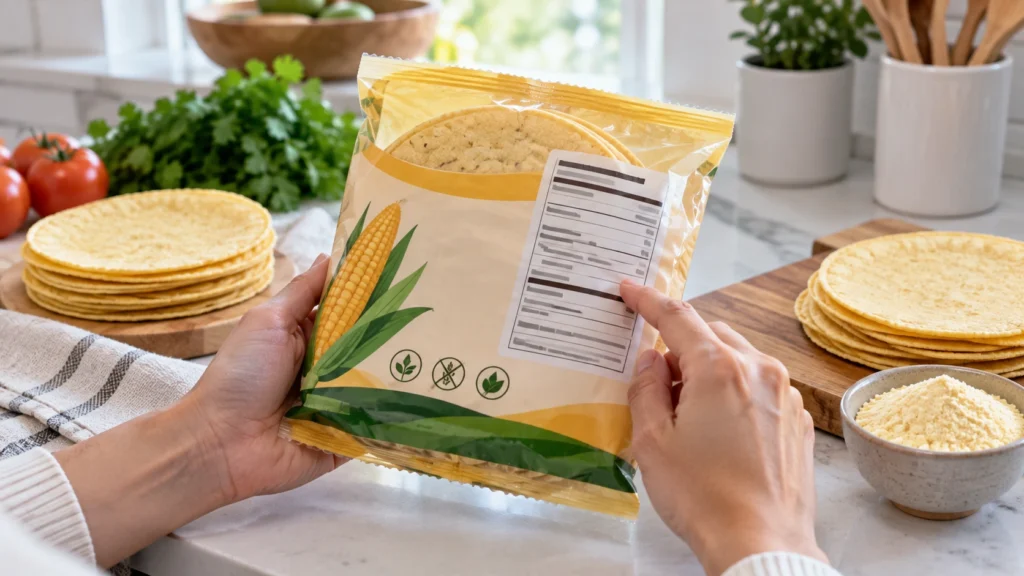
If you are buying packaged tortillas, check the ingredient list and any gluten-free labeling. If you are eating at a restaurant, ask how the tortillas are made and whether they are prepared separately from wheat-containing foods.
For most people, the practical answer is simple: choose corn tortillas that are clearly identified as gluten-free when strict gluten avoidance is necessary.
What Are Corn Tortillas Made Of?
Traditional corn tortillas begin with corn that has been treated through a process called nixtamalization. The corn is cooked and soaked in an alkaline solution, commonly made with food-grade calcium hydroxide, before being washed and ground into masa.
This process changes the corn’s texture and makes it suitable for tortilla dough. The masa is then mixed with water, shaped into thin rounds, and cooked on a hot surface.
A simple corn tortilla may contain:
- Corn masa or masa harina
- Water
- Salt
Commercial tortillas may also contain preservatives, gums, or other ingredients to improve texture and shelf life. These additions are not automatically sources of gluten, but the complete ingredient list still needs to be checked.
Masa harina should not be confused with ordinary cornmeal. It is specially prepared corn flour used to make masa dough. When purchasing masa harina for homemade tortillas, choose a product that meets your gluten-free needs.
Corn Tortillas vs Flour Tortillas
Corn and flour tortillas may look similar, but their main ingredients are different. Traditional flour tortillas are usually made with wheat flour, which contains gluten. Traditional corn tortillas use corn masa instead.
| Feature | Corn Tortillas | Flour Tortillas |
|---|---|---|
| Main ingredient | Corn masa | Usually wheat flour |
| Naturally gluten-free ingredient? | Yes, corn is naturally gluten-free | No, wheat contains gluten |
| Typical texture | Firmer, with a distinct corn flavor | Softer and more flexible |
| Common uses | Tacos, enchiladas, tostadas | Burritos, wraps, quesadillas |
| Gluten-free guarantee? | Not automatically; check ingredients and preparation | Usually contains gluten unless specifically made with gluten-free flour |
| Best choice for strict gluten avoidance | A verified gluten-free corn tortilla | A specifically labeled gluten-free flour tortilla |
The table shows why corn tortillas are often the easier option for a gluten-free diet. Still, the safest choice depends on the actual product rather than the tortilla’s appearance or name.
When Are Corn Tortillas Not Gluten Free?
Corn tortillas may contain gluten when wheat or another gluten-containing ingredient is added. Some products combine corn and wheat flour to create a softer texture. Others may use ingredients that require closer label inspection.
Cross-contact is another concern. This happens when gluten from one food is transferred to another food that would otherwise be gluten-free.
For example, a restaurant may warm corn tortillas on the same surface used for flour tortillas. A shared fryer may also expose tortilla chips to gluten if wheat-containing foods are cooked in the same oil. At home, shared utensils, cutting boards, or preparation surfaces can create similar problems.
Cross-contact does not mean that every shared kitchen is unsafe. It means that preparation practices matter, particularly for people with celiac disease.
When in doubt, ask the manufacturer or restaurant about ingredients and handling rather than assuming the tortilla is safe.
How to Choose Gluten-Free Corn Tortillas
Choosing a suitable tortilla becomes easier when you know what to look for. Start with the package rather than relying only on the product name.
Read the ingredient list. Look for wheat, barley, rye, or ingredients derived from gluten-containing grains. A short ingredient list can be helpful, but it is not a substitute for checking the product carefully.
Look for gluten-free labeling. A clear gluten-free claim can provide useful assurance. Certification from a recognized gluten-free program may offer additional confidence because it involves specific standards and verification.
Check allergen information. Wheat allergen statements can help identify wheat-containing products, but the absence of a wheat warning does not necessarily prove that a food is gluten-free.
Contact the manufacturer when necessary. If the label is unclear, ask whether the tortillas contain gluten ingredients and how cross-contact is controlled.
Consider your individual needs. Someone avoiding gluten by preference may make different choices from someone with celiac disease. If you have a medical reason to avoid gluten, follow the guidance of your healthcare professional.
A reliable product is one whose ingredients and preparation meet your needs—not simply one that looks like a traditional corn tortilla.
Are Corn Tortillas Safe for Celiac Disease?
Corn tortillas can be part of a gluten-free diet for people with celiac disease when they are made without gluten-containing ingredients and appropriate precautions are taken to prevent cross-contact.
Celiac disease is an autoimmune condition in which gluten triggers an immune response that damages the small intestine. Because of this, strict gluten avoidance is important.
For packaged tortillas, choose products with clear gluten-free labeling and check the manufacturer’s information when needed. For restaurant meals, ask whether the tortillas are made from corn only and whether they are heated or handled separately from flour tortillas.
Also consider the rest of the meal. A gluten-free tortilla does not make a taco or enchilada gluten-free if the filling, sauce, seasoning, or preparation introduces gluten.
If you are newly diagnosed or unsure about a product, a registered dietitian experienced in celiac disease can help you make suitable food choices.
Are Restaurant Corn Tortillas Gluten Free?
Restaurant corn tortillas are not automatically gluten-free, even when the menu describes them as corn tortillas.
Some restaurants use tortillas made from a mixture of corn and wheat. Others use pure corn tortillas but prepare them on shared equipment. Sauces, marinades, and toppings may also contain gluten.
Before ordering, ask a few practical questions: Are the tortillas made with 100% corn? Do they contain wheat flour? Are they warmed on a shared surface? Are the fillings and sauces gluten-free?
If you have celiac disease, explain that you need to avoid gluten cross-contact, not just visible wheat ingredients. A restaurant that understands your requirements and can explain its preparation process is generally a better choice than one that cannot confirm how the food is handled.
How to Make Gluten-Free Corn Tortillas at Home
Homemade corn tortillas can be a simple way to control the ingredients. You only need gluten-free masa harina, water, and a little salt if desired.
Mix the masa harina with water until a soft dough forms. Let it rest briefly, then divide it into small balls. Press each ball between two sheets of suitable food-safe material using a tortilla press or a flat, heavy pan.
Cook the tortillas on a hot, dry skillet until they are set and lightly browned. Keep the cooked tortillas covered with a clean towel so they stay warm and flexible.
For strict gluten avoidance, use clean utensils and preparation surfaces. If your kitchen also handles wheat flour, take care to prevent flour dust or crumbs from contacting the dough.
Homemade tortillas are useful because you can choose the ingredients yourself, but the safety of the final food still depends on the ingredients and preparation environment.
What About Corn Tortilla Chips?
Corn tortilla chips may be gluten-free, but the same ingredient and cross-contact rules apply.
Plain chips made from corn, oil, and salt may contain no gluten ingredients. However, flavored chips can include additional seasonings, and restaurant chips may be fried in oil shared with gluten-containing foods.
Check packaged chip labels and ask restaurants about shared fryers when strict gluten avoidance is necessary. Do not assume that every chip made from corn is automatically suitable for a gluten-free diet.
Frequently Asked Questions
Do corn tortillas contain wheat?
Traditional corn tortillas are usually wheat-free, but some brands may add wheat flour. Always check the ingredient label.
Are yellow corn tortillas gluten free?
Yellow corn is naturally gluten-free, but check the finished product for added ingredients and cross-contact.
Are white corn tortillas gluten free?
White corn is naturally gluten-free, but the tortilla may still contain gluten from added ingredients or shared equipment.
Are corn tortillas healthier than flour tortillas?
Corn tortillas can be a good gluten-free option, but neither type is automatically healthier. Nutrition depends on ingredients and portion size.
Can I eat corn tortillas on a gluten-free diet?
Yes, if they contain no gluten ingredients and are prepared without cross-contact.
Is masa harina gluten free?
Masa harina is made from corn and is generally gluten-free. Check the package label for confirmation.
Are corn tortillas safe for people with wheat allergies?
They may be safe if they contain no wheat, but always check allergen information carefully.
Can gluten-free corn tortillas contain other allergens?
Yes. Gluten-free does not mean allergen-free, so review the full ingredient and allergen labels.
Final Thoughts
So, are corn tortillas gluten free? Traditional corn tortillas can be, but the finished product is not automatically guaranteed to be gluten-free. Check ingredients, look for reliable labeling, and consider cross-contact when necessary. With the right product and preparation, corn tortillas can be a convenient part of a gluten-free diet.